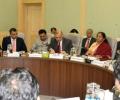
At a pre-Budget meeting, the FM was asked to ensure that NBFCs come out of the liquidity crisis they are facing with the help of RBI. They also spoke about the futility of trying to achieve a 3 per cent fiscal deficit target over the medium term.

Even with the possible expenditure roll-overs and off-budget financing, the fiscal deficit target will not be met. The FRBM Act, after its amendment in 2018, allows a fiscal deficit slippage of not more than 0.5 per cent for any given year, provided there are justifications. These justifications include war, national security, severe collapse in the agriculture sector, a major natural calamity, big structural economic reforms, or the decline in real output growth of a quarter by at least 3 percentage points below its average of the previous four quarters.
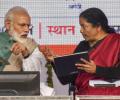
In the 2020-21 Budget, the prime minister and the finance minister are keen to stamp their narrative, after various rollbacks following the previous Budget, said top government sources. Besides the scheduled meetings, the sources said, the Prime Minister's Office is expected to hold several meetings with top secretaries and officials on various ongoing schemes, their performance and also how some of them could be tweaked for better results.

India exported $102 million worth of dehydrated onions in 2018-19.

Though the NITI Aayog did not give its estimates for the required GDP growth at constant prices, economists pegged it at 9 per cent, a feat not seen since the GDP series was revised with 2011-12 as the base year.

Long-term capital gains tax may be scrapped and the burden of dividend distribution tax could perhaps be shifted from companies to shareholders. Also, the Budget could provide income tax relief for the salaried classes, while proposing tax sops for small, medium and micro enterprises.
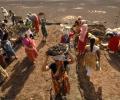
Sources said the rural development ministry has sought an additional Rs 20,000 crore for MGNREGA for 2019-20 over and above the budgeted Rs 60,000 crore for 2019-20. Though, all of the PM-KISAN savings may not be transferred to fund MNGREGA's extra needs, sources said a part of this could be transferred.
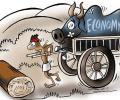
'We expect a pick-up in the second half of the current fiscal. But before that, data is likely to show a further slowdown. The second quarter print is likely to be worse than the first quarter,' said a senior official.

The economy could grow at 6-6.5 per cent this fiscal year (2019-20 or FY20), said Chief Economic Advisor Krishnamurthy Subramanian, revising his earlier estimate of 7 per cent in the Economic Survey. In an interaction with Arup Roychoudhury, he said supply-side measures, including corporation tax cuts, will boost consumption and demand, and non-tax revenue may make up for shortfall in tax revenues.
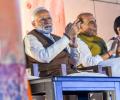
Dissatisfaction with the state leadership, along with caste and sectarian factors and economic issues -- particularly those relating to jobs and rural distress cost the BJP.

Although demonetisation and improper implementation of GST along with falling prices are being blamed for much of the distress in rural India for some time, experts believe those may not be the only reason.
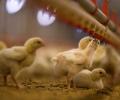
A data shows the number of backyard poultry has risen by 46 per cent between 2012 and 2019. The development is extremely positive because it provides an incentive for small and marginal farmers to rear birds.

As the number of cross-bred female cattle rise, the entire concept of lean and flush seasons for milk will go away, as these animals give similar quantities in all seasons.

The BJP's effort comes in the wake of Commerce and Industry Minister Piyush Goyal set to attend the eighth RCEP ministerial meeting in Bangkok from October 10 to 12.

The intention of the government is to cap prices of drugs that are essential and which the public widely uses.

Divestment in BPCL, SCI, Concor, NEEPCO, and THDC would help the Centre keep its fiscal deficit in check in the wake of subdued tax revenues and a Rs 1.45-trillion hit for the exchequer from corporation rate cuts.

Sajjid Chenoy, India economist at JP Morgan is the new part-time member.

Among possible new members, former chief economic advisor Arvind Virmani's name is doing the rounds.
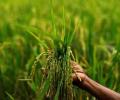
However, the estimates could change in the coming months, as full impact of excess rainfall and floods on the standing soybean and urad crops in central and western India in late August and September has not yet been fully taken into account.
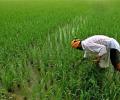
It has decided not to levy the 2 per cent tax deducted at source (TDS) on cash payments above Rs 1 crore made through Agricultural Produce Market Committees.
 © 2026 Rediff.com - Investor Information - Advertise with us - Disclaimer - Privacy Policy - Sitemap - Feedback - About us - Terms of use - Grievances